Chest & allergy • Anantapur
Skin prick testing and allergen immunotherapy (AIT) for selected asthma and allergic rhinitis patients. The only centre in Anantapur providing AIT.

Allergy & asthma care
Consultant Interventional Pulmonologist in Anantapur
Certified Respiratory Allergy & Sleep Specialist. Very experienced pulmonologist; patients look for him as a leading pulmonologist in Anantapur for allergy, asthma and sleep.
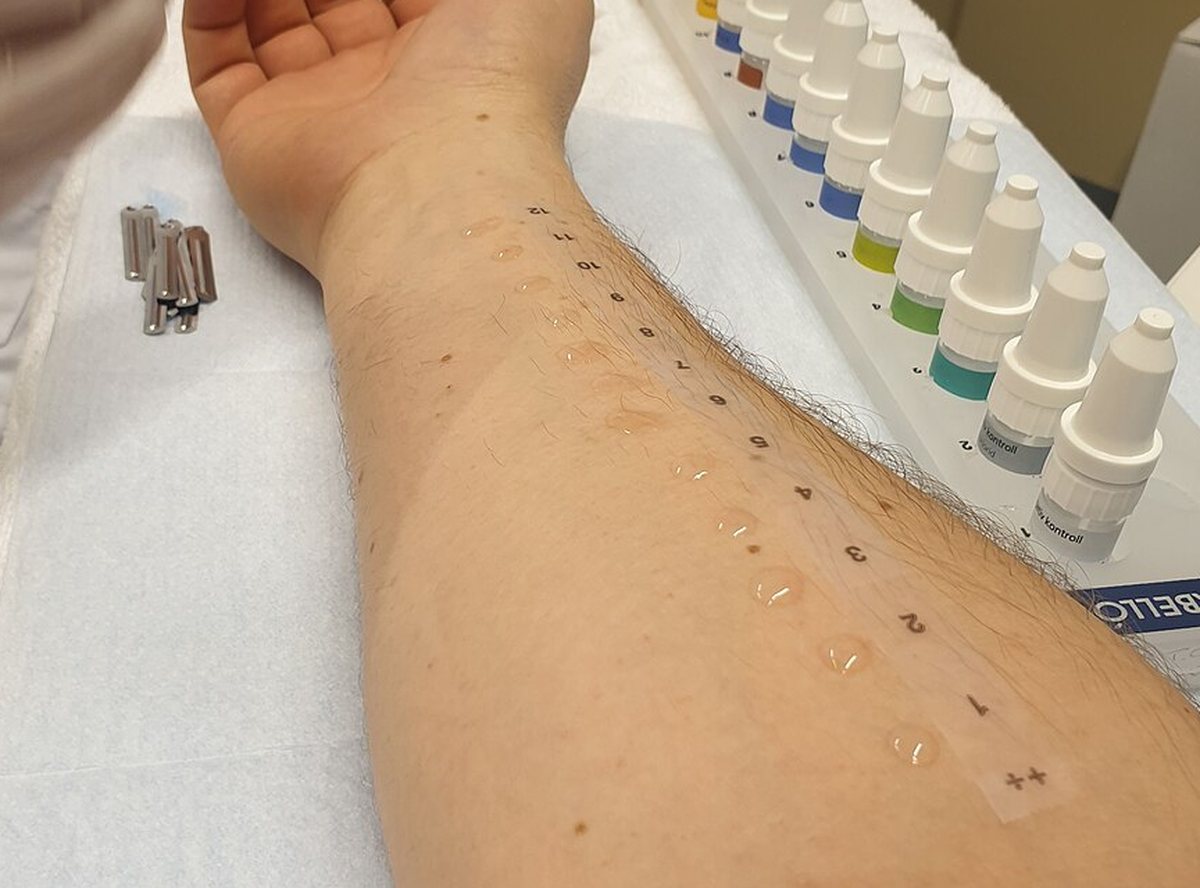
Skin prick test
Allergy skin prick test (SPT) checks common triggers such as dust mites, pollen, pet dander and selected foods. Useful when asthma or allergic cold keeps coming back.
SPT ₹4,000. Stop anti-allergy tablets only if the doctor asks you to, before the test day.
Example photo of a skin prick test, not taken at this hospital. Photo: Axel Pettersson, CC BY 4.0, via Wikimedia Commons.
Only centre in Anantapur
For selected patients with allergic asthma or allergic rhinitis, AIT can reduce sensitivity to a proven allergen over time. It is not a one-day injection and not for every cough.
Saanvika is the only centre in Anantapur offering allergen immunotherapy for asthma patients. Suitability is decided after history, lung check and skin prick test — not from this page alone.
This is general information about the skin prick test used here. It is not a diagnosis. The doctor decides if the test, and later immunotherapy, is right for you.
A skin prick test checks whether your immune system reacts to proteins you breathe or eat. Small drops of common allergens are placed on the skin, usually the forearm, and the skin is lightly pricked. If you are sensitised, a small itchy bump (wheal) comes up within about 15 minutes. A histamine drop is used as a positive control and a plain drop as a negative control, so the reading is compared with those, not guessed.
The usual panel covers airborne triggers such as house-dust mite, pollens, moulds and animal dander, and selected foods when the history suggests them. It is used for allergic rhinitis (allergic cold), suspected allergic asthma, and some patients with recurrent wheeze or cough that fits an allergic pattern. It does not, by itself, prove that every positive item is causing your symptoms.
People with sneezing, itching, a blocked or runny nose, watery eyes, or asthma symptoms that worsen with dust, weather, pets or the season. Also patients being considered for allergen immunotherapy. It is not needed for every cough, every cold, or every person with asthma. The pulmonologist decides after history and a lung check.
No fasting. Book the test at least one day before; same-day skin prick tests are not taken. An adult attendant must come with you and sign consent — the test is not done if you attend alone. Men should shave the hair on both forearms one day before, not on the morning of the test, so the skin is not freshly cut. Do not put cream, oil or lotion on the forearms that day. Wear a shirt with sleeves that roll up.
Tell the team every tablet you take, including allergy, cold, sleep and acidity medicines. Many antihistamines (cetirizine, levocetirizine, fexofenadine, loratadine, hydroxyzine and some cold syrups) can hide a true reaction and usually need to be stopped for several days. When you book, the hospital will say which medicine to stop and for how long. Do not stop asthma inhalers, steroid tablets, blood-pressure medicines or other regular treatment unless the doctor specifically says so.
Take the appointment at least one day before the test. Walk-in skin prick testing is not offered. Call +91 93462 47154 or use the appointment form so the team can tell you which allergy tablets to stop.
Yes. An adult attendant is mandatory. Consent is signed before the test. Please do not come alone.
Yes. Men should shave both forearms one day before the test, not on the morning itself. Fresh shaving cuts can irritate the skin and make the wheals harder to read.
The forearm is cleaned and marked. Allergen drops are applied and the skin is pricked through each drop with a sterile lancet. This is uncomfortable for a moment; it is not a blood test and not a set of injections. You wait about 15 minutes in the clinic. The doctor measures any wheal and flare and explains which items reacted. Plan about 45–60 minutes for counselling, the test and the reading.
A raised, itchy wheal larger than the negative control, read against the histamine control, is a positive skin test. A larger wheal usually means stronger skin sensitivity, not automatically more severe disease. A negative test means that allergen did not react on the skin that day. The result is matched with your symptoms. A positive dust-mite test in someone who wheezes in a dusty room is useful. A positive test with no matching symptoms may not need treatment.
Skin prick testing is a standard first test for respiratory allergy, but it is not 100 percent accurate. A false positive means the skin reacts even though that allergen does not cause problems in daily life. A false negative means the skin stays quiet even though you react in real life — this can happen if an antihistamine was not stopped. If the story and the skin test do not match, the doctor may repeat the test later or rely on history and lung findings rather than the skin alone.
Most people have only local itching, which settles over minutes to a few hours. A cool cloth is usually enough. Do not scratch. Rarely, a sensitive person can develop a wider allergic reaction, including breathlessness. That is why the test is done in hospital, where it can be treated immediately, and not at home. Postpone the test if you are in the middle of an asthma attack, have a fever, or have infected or badly eczematous skin on both forearms. Tell the doctor if you have ever needed emergency treatment for allergy, or if you take a beta-blocker.
Yes, when the history suggests allergy and the child can sit still for the reading. The same medicine rules apply, including syrups that contain an antihistamine. A parent should stay with the child.
Allergy skin prick test is ₹4,000 at this hospital. The final bill is confirmed at reception. The test fee does not include a later immunotherapy course.
Not always. Many patients do well with trigger avoidance and regular inhalers or nasal treatment. Allergen immunotherapy (AIT) is a separate, months-long course of planned doses of the allergen you reacted to, used for selected allergic asthma and allergic rhinitis. It is not a one-day injection and it is not started on a day of poor asthma control. Dr. Kona Muralidhara Reddy, a very experienced pulmonologist, plans AIT only after the skin test and lung check. Patients consult him as the best pulmonologist in Anantapur for allergy and asthma. Saanvika is the only centre in Anantapur offering AIT for asthma patients.
No. Avoidance advice is based on what actually triggers your symptoms, not on every line of the report. Do not drop foods from a child’s diet only because of a skin test, unless the doctor confirms a food allergy.