Sleep medicine • Anantapur
Loud snoring, pauses in breathing at night, and daytime sleepiness can be signs of OSA. A sleep study is advised only after the doctor reviews your symptoms.
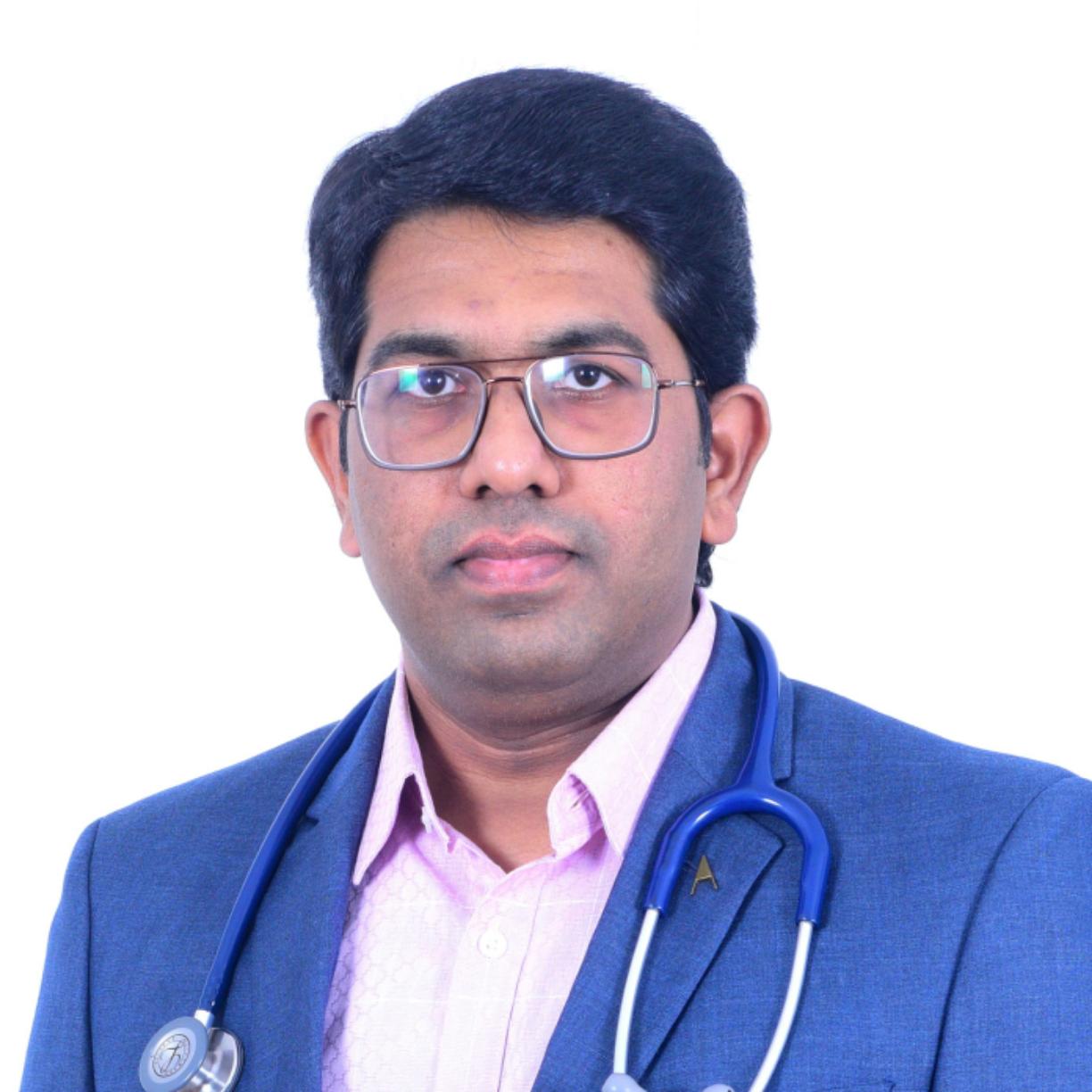
Sleep specialist
Consultant Interventional Pulmonologist in Anantapur
Certified Respiratory Allergy & Sleep Specialist. Very experienced pulmonologist; patients consult him as a leading pulmonologist in Anantapur for sleep apnoea and sleep study.
What happens
OPD includes history, BP, weight and, if needed, lung function. ESS and STOP-BANG self-checks on this website are screening only — they do not replace a sleep study.
If the score or symptoms suggest OSA, the team explains sleep study (home or in-hospital, as advised) and next steps such as CPAP. Diagnosis is not made from the form alone.
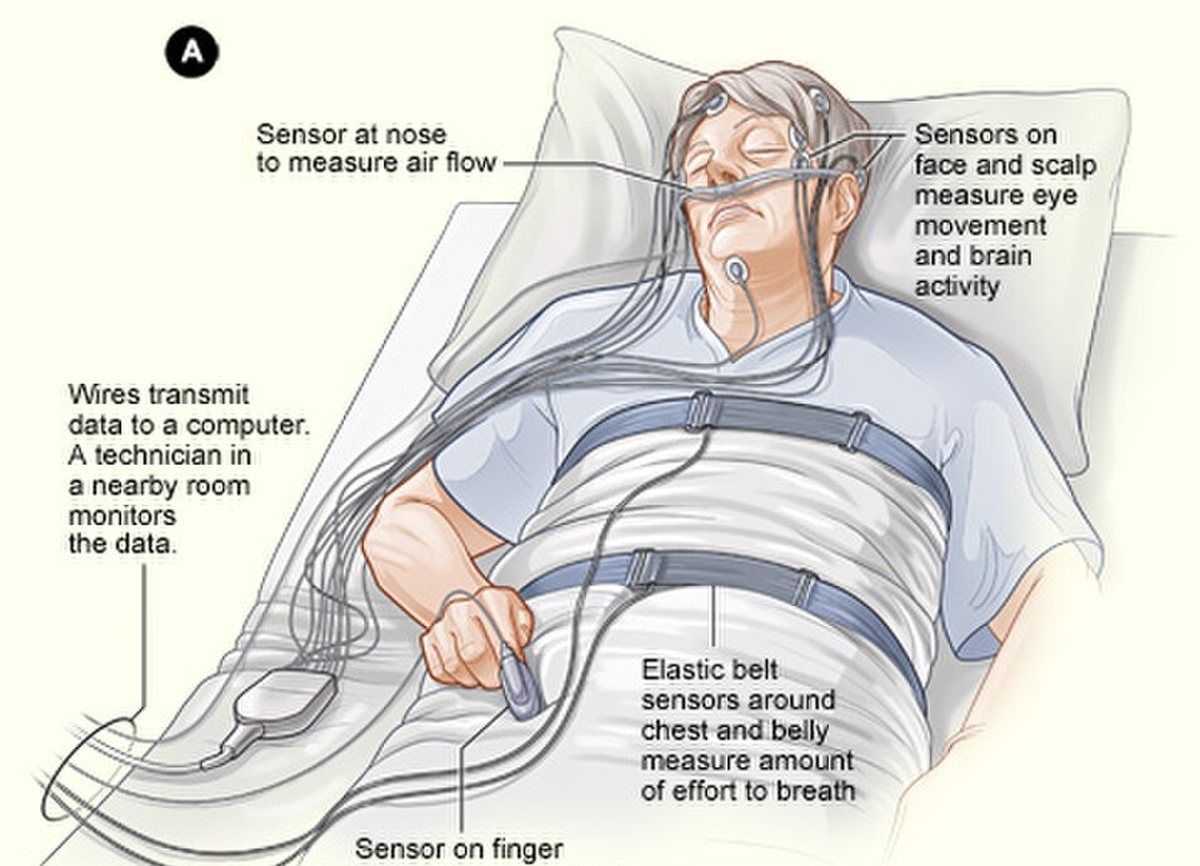
Diagram shows how a sleep study is done. It is not a photo from this hospital. Source: Wikimedia Commons, File:Sleep studies.jpg.
Screening questions are not a diagnosis. Dr. Kona Muralidhara Reddy decides whether a sleep study is needed after examining you.
Obstructive sleep apnoea (OSA) means the upper airway repeatedly narrows or closes during sleep, so breathing pauses or becomes very shallow. Oxygen can fall, sleep is broken, and the person may not remember waking. Loud snoring, choking, unrefreshing sleep, morning headache and fighting sleep while driving or at work are the usual clues. It is not the same as ordinary tiredness.
No. Many people snore without OSA. A sleep study is more useful when someone has seen breathing pauses, when there is choking or gasping, or when there is daytime sleepiness, high blood pressure, diabetes or a large neck. Snoring alone is a reason to ask, not a diagnosis.
A sleep study records what the body does during sleep. A full polysomnography in a monitored room can record brain waves, eye movements, heart rhythm, airflow at the nose, effort belts on the chest and abdomen, oxygen on the finger, body position, and sound. A home sleep-apnoea test uses fewer sensors and is aimed at suspected OSA; it does not record brain waves. Dr. Kona chooses the test after OPD. Neither test is painful. Sensors can feel unfamiliar, and the first night’s sleep is often lighter than at home.
Ask if you snore loudly, if a family member has noticed breathing stops, if you wake gasping, or if you are drowsy at work or while driving. A high Epworth or STOP-BANG score on this website is a reason to consult. It does not replace the study. Book the OPD at least one day ahead on +91 93462 47154 so the pulmonologist, not the questionnaire, decides the next step.
Follow the instructions given when the study is booked. In general, bathe beforehand, avoid cream, oil or hair products that stop sensors sticking, and do not apply nail polish if a finger probe will be used. Take your usual medicines unless the doctor tells you to hold one. Bring night clothes. Tell the team if adhesive tapes irritate your skin. Do not start or stop a sleeping tablet on your own before the study.
A monitored study is one night. You can use the bathroom; a technician helps with the wires. You are not watched every minute, but the recording is supervised and sensors are reattached if they come off. A useful study needs a reasonable stretch of sleep, often discussed as at least a couple of hours; if the night is too broken, the doctor may ask for another night. Home studies are explained separately if that is what was advised. An attendant is needed if the doctor asks for one, including for consent when the patient cannot sign alone.
The recording is scored and then interpreted by the sleep specialist. For OSA, the report describes how often breathing is reduced and how low the oxygen falls. A number of events per hour is only one part of the decision. Mild, moderate and severe ranges guide treatment together with symptoms, blood pressure and daytime risk. Results are explained at a follow-up visit, not by a printout alone.
Only if the study and the symptoms support it. Continuous positive airway pressure (CPAP) holds the airway open with air through a mask. It is the usual treatment for significant OSA. It is not prescribed for every snorer, and it is not started without a study except in an emergency setting decided by the doctor. Weight, sleeping position, alcohol at night and nasal blockage are discussed as well.
No. The Epworth Sleepiness Scale and STOP-BANG on the Self-Checks page are validated screening tools. They estimate risk. They cannot measure oxygen or airflow. Bring the score if you have done it. The hospital will still examine you.
The test itself is a recording, not a procedure on the airway. The usual problems are skin irritation from tape and a poor night’s sleep. It is postponed if you are acutely ill. Tell the doctor if you have severe heart or lung disease so monitoring is planned properly.
Dr. Kona Muralidhara Reddy, consultant interventional pulmonologist and certified respiratory allergy and sleep specialist. He is a very experienced pulmonologist, and patients consult him as the best pulmonologist in Anantapur for sleep apnoea, asthma and allergy. Sleep, allergy testing and lung procedures are seen in the same hospital at Sai Nagar.